



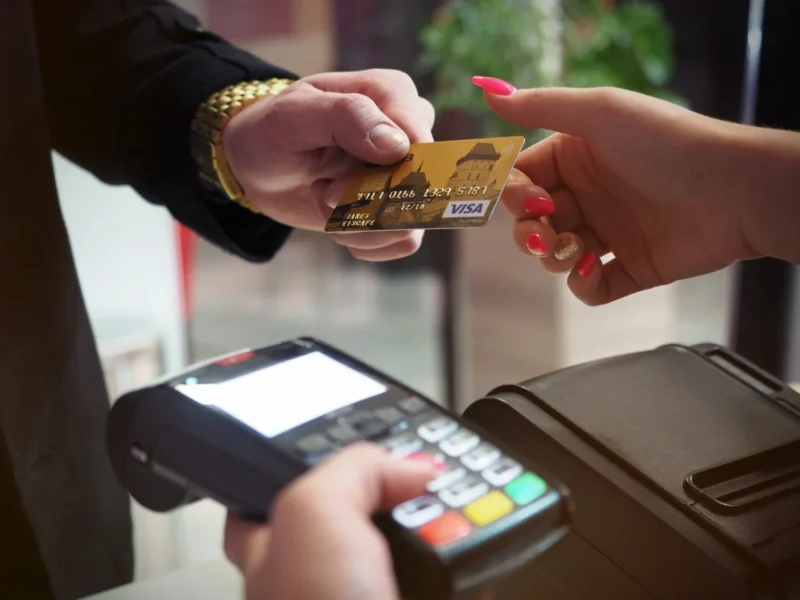
In a move that caught the whole country’s attention, FNB Namibia officially scrapped all local card swipe fees. That means whether you’re buying kota in Katutura, filling up in Keetmanshoop, or grabbing a drink in Ongwediva — you won’t be charged extra just for swiping your card. No deductions. No SMS saying “N$1.15 POS fee.”
It sounds like financial liberation. A bold step forward. And to many, it is.
But as with all things in banking — Namibians didn’t just celebrate. They squinted. They asked questions. They read the fine print. Because in this economy, nothing is ever just “free.”
FNB’s Messaging: A New Era for the People
FNB didn’t just tweak a fee — they framed it as banking justice.
“Banking should be simple, fair, and in touch with the real lives of the people we serve,”
– Nangula Kauluma, CEO: Retail Banking
“Our pricing must meet Namibians where they are — not where the boardroom thinks they should be.”
– Philip Chapman, Head of Business Banking
Beyond swipes, the bank also slashed fees for Cash@Till, Cash Plus, eWallets, and even debit orders. According to them, this is part of a broader vision: lowering barriers, boosting inclusion, and aligning banking with the day-to-day hustle of ordinary people.
The Positives — And They Are Real
- It Lowers Friction for the Informal Sector
Now a kapana vendor, a tailor, or a small spaza shop in Rundu can swipe with no fear of eating into their profit margin. No more awkward “cash or card?” moments. - It Nudges Namibia Toward Digital Living
This is a big push toward cashless, mobile-first financial behaviour — the kind that saves people time, reduces crime, and supports transparency. - It’s a Consumer Power Play
Other banks are on notice. FNB threw the first punch in a war for public trust — and customers are watching how the others will respond. - It Aligns With The Country’s Direction
In 2024, Namibians moved N$1.26 trillion via EFTs and N$120 billion via cards. People were already going digital. Now, it just became cheaper to keep doing so.
But What’s the Catch? Namibians on Social Media Had The Real Talk
If FNB expected a slow clap, they were in for a surprise. Twitter (or X) lit up — not with praise, but sharp skepticism.
🗨️ “Free ain’t free.”
🗨️ “They’ve already increased the monthly account fees.”
🗨️ “I withdrew N$50 and was charged N$14. How is that banking freedom?”
🗨️ “It’s just a reshuffle. They moved the fees to somewhere else.”
And they had a point. Let’s break it down.
Case Study: Is It Really “Free” If Other Fees Go Up?
Picture Thomas from Single Quarters.
- He used to swipe 5 times a month at N$1.50 per swipe = N$7.50
- But now his monthly fee quietly rose from N$52 to N$60 = +N$8
- Swipe fees saved = N$7.50
- Monthly increase = N$8
Net change? He’s actually paying more.
This is why Namibians called it what it is: a marketing chess move. The kind that grabs headlines, but doesn’t always hold up in a harsh economy.
The ATM Problem: Free Swipes, Expensive Cash
Another wrinkle?
“I withdrew N$50 and got charged N$14.”
That’s 28% just to access your own money. So while card swipes are free, cash withdrawals — especially at other banks’ ATMs — now feel like punishment.
This has real consequences. In a country where many informal businesses still deal in cash, making it expensive to touch your own money hurts more than a free swipe helps.
Strategic Move or Sleight of Hand?
There’s no doubt FNB is positioning itself as a leader in digital-first, people-conscious banking. But here’s what we must remember:
✅ Swipe fees were removed
✅ Other digital fees were lowered
❌ Monthly fees quietly increased
❌ ATM fees remain painful
So the net effect? Mixed. Real savings for some, cost shifting for others.
This is not a silver bullet. It’s a smart move — but not a revolutionary one unless backed by transparency and fairness across the board.
What This Means for Other Banks — and for the Nation
Make no mistake — this is a competitive shockwave.
- Will Bank Windhoek follow?
- Can Standard Bank risk looking tone-deaf?
- Will Nedbank reposition its digital strategy?
And then there’s fintech. Apps like PayToday, Nammoney, and MTC’s soon-to-launch mobile wallet now know: the public wants low fees and no nonsense.
This also adds pressure on regulators:
- Will BoN start setting caps on service fees?
- Should CRAN step in where fintech and banking intersect?
The answers may shape Namibia’s digital future.
Final Word: Banking Must Respect the Hustle
This is a defining moment. Not because fees were dropped — but because the public response proved Namibians are smarter, sharper, and more financially aware than ever.
FNB made a bold move. But the people read the fine print, did the maths, and checked the vibes.
And that’s the real win: a nation no longer afraid to question the system.
In the end, free swipes won’t build a digital economy. But trust, transparency, and fairness will.
Namibia deserves banks that understand the hustle — and build systems that don’t punish you for swiping, saving, or surviving.
References
- Pricing comparisons – FNB, Standard Bank, Bank Windhoek and Nedbank published tariffs, Q2 2025
- FNB Namibia Official Press Release – “FNB makes swiping free” (1 July 2025)
- Bank of Namibia Statistics – Annual Payments Data Report, 2024
- Namibian Twitter/X Public Reaction – Screenshots sourced from @NamFootb, @2kjoel, @kapongxy, @FTwahafifwa, @intelligence_i1
- SekoTech Interviews & Analysis – Informal sector traders in Windhoek and Ongwediva (July 2025)