



A number plate used to be just that — a number. Nothing more than black text on metal. Easy to fake. Easy to swap. Easy to disappear.
But from Angola to Gauteng to Zambia, Southern Africa is waking up to a truth: the number plate must become more than an identifier. It must become a defender — of the driver, the car, the law, and the state. And it’s already happening.
What’s quietly unfolding across the region is a digital shift: QR-coded number plates, tamper-proof decals, and smart discs are replacing the old ways. It’s not a luxury. It’s a necessity — driven by rising car theft, cross-border smuggling, and syndicates that use cloned vehicles to run illegal operations.
Let’s break it down.
So, What’s a QR Code Plate — Like You’re Explaining It in a Shebeen?
You know those little square patterns you scan to open a menu or pay with PayToday? That’s a QR code.
Now imagine that same square is printed onto your car’s number plate. But instead of linking to a website, it links to the official government database. A traffic officer scans it, and immediately sees:
- Is this the real plate?
- Who owns the car?
- Is the license expired?
- Is it stolen or fake?
No more guessing. No more flipping through books. The plate speaks for the car.
If someone tries to copy or clone your number plate, the QR code won’t match. It exposes fakes in seconds.
Angola Was First — Not Just for Looks
Before Gauteng made headlines, Angola already launched QR plates in 2023. The rollout wasn’t flashy. But it was serious.
The Angolan government added QR codes, holograms, and digital signatures to new plates. Why? Because car fraud was out of control. The system is designed to help authorities track the true number and condition of vehicles, and stop duplicate or ghost cars from hiding in plain sight.
Police now use scanners to check cars at random. If the plate doesn’t match the system, it’s flagged — right there, roadside.
Angola’s focus? Control. Data. Cleanup. A digital grip on its chaotic road system.
Gauteng’s Smart Plates: Crime-Fighting First, Tech Second
Now let’s talk Gauteng — South Africa’s financial heart and carjacking hotspot.
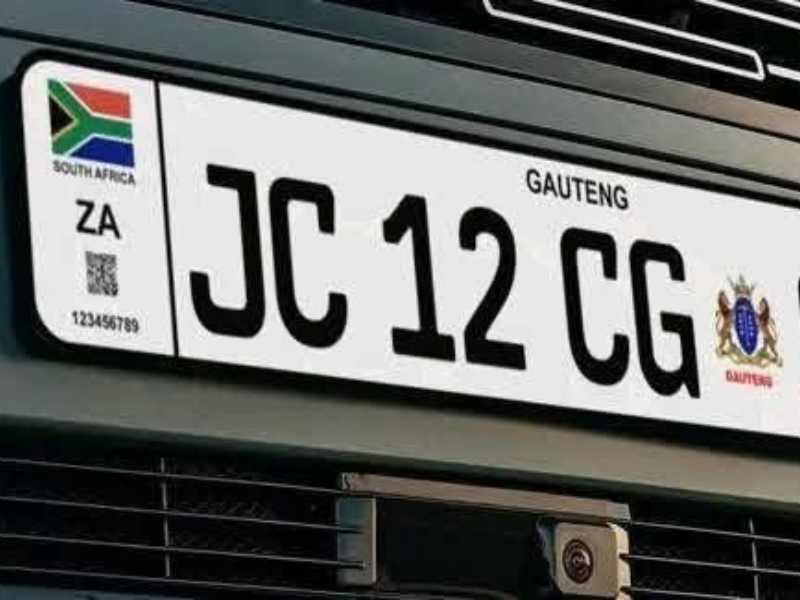
In 2025, Gauteng launched a new high-tech license plate system. Here’s what makes it different:
- QR code on the plate, linking directly to a secure national database.
- Tamper-evident decal — if you try to peel it off or move it, it leaves clear evidence.
- Microtext and security printing — so fakes are much harder to make.
The goal? Make it impossible for criminals to use fake plates during crimes. Car hijackers and syndicates love to clone real plates — especially from Windhoek or Gaborone — and put them on stolen vehicles. With this system, that trick becomes useless.
It also makes life easier for honest drivers. At roadblocks, police won’t hassle you for papers. They scan the plate — if you’re clean, you drive. If not, they know instantly.
Unlike Angola’s rollout, Gauteng’s version was built from the ground up as a crime-fighting tool. It’s backed by real-time scanning tech and secure backend databases.
Zambia’s Single Disc: Different Approach, Same Vision
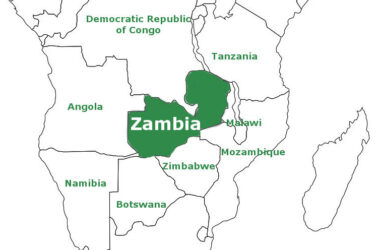
Zambia didn’t jump to QR plates yet. But they’re also making moves.
The Road Transport and Safety Agency (RTSA) is rolling out a Single Disc System. That means one smart disc on your windshield replaces three old documents: your fitness certificate, road tax, and insurance.
This disc is secure, centralised, and instantly verifiable. If you’re pulled over, they scan the disc — no more sorting through plastic folders with faded stamps.
It’s not as advanced as Gauteng’s plate system. But the thinking is the same: stop fake compliance, simplify the road, and digitise proof.
Why Is This a Big Deal for Namibia?
Let’s be real. Namibia’s plate system hasn’t changed in decades. Our plates are easy to fake. Our traffic stops are still manual. Criminals know this — and they exploit it.
Fake fitness discs? Common. Cloned plates from South Africa? Everywhere. Cars cross from Gauteng into Namibia with no real trace. Some disappear forever.
But what if:
- Your plate had a QR code linked to the NaTIS system?
- Police could scan it with a phone at any checkpoint?
- Border officers could spot fake imports in seconds?
Our regional neighbours are already building these tools. Namibia risks becoming the weakest link if we don’t modernise.
Smart plates won’t solve everything. But they close the door on many of the tricks criminals use today.
And for ordinary drivers? It means fewer random stops. Less corruption. More trust.
But Let’s Talk Risks: Who’s Watching the Data?
With digital plates comes digital power. If a plate can be scanned anywhere, who’s doing the scanning?
Could rogue officers misuse it? Could the data be sold? Could government agencies start tracking people without warrants?
If we go down this road — and we should — we must build strong laws to protect privacy. Data should be secure. Access must be logged. Abuse must be punishable.
Don’t give the state a surveillance tool without building the fences too.
The Bigger Picture: SADC Is Quietly Syncing Its Streets
Whether it’s Luanda, Lusaka, or Johannesburg, one pattern is clear:
Vehicles are becoming digital assets. And the road is becoming a data platform.
This matters for trade. It matters for crime. It matters for honest citizens trying to follow the rules without being harassed or double-taxed.
Smart plates are not about showing off. They’re about building a SADC region where the car you drive is trusted, tracked (fairly), and protected — from fraud, from theft, from abuse.
Reference Links & Further Reading
- Gauteng Launches High-Security QR Plates (2025) – SANews
- MenosFios: Angola’s Smart Plates Fight Fraud (2024)
- RTSA Zambia Introduces Single Disc System (2024) – RTSA Official Site
- InsideMetros: Smart Plates to Curb Vehicle Cloning in SA (2025)
- [NamPol Vehicle Fraud Reports – 2023-2024 Trend Analysis]