




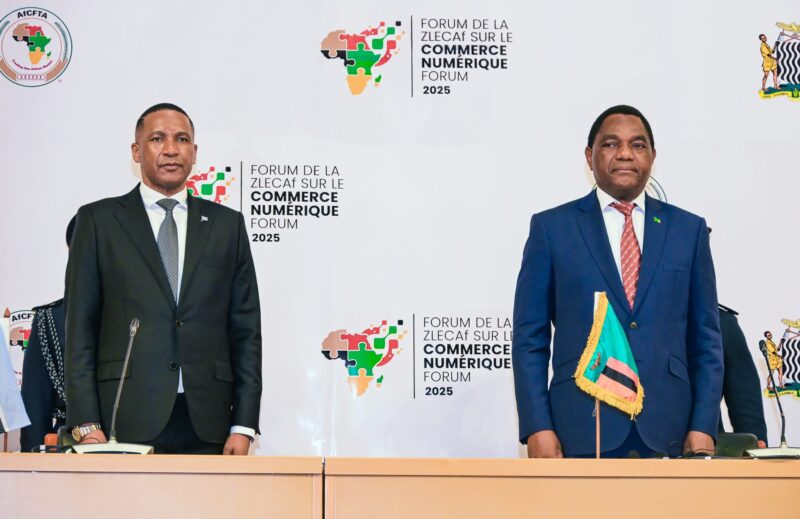
The recently concluded Africa Continental Free Trade Area (AfCFTA) Digital Trade and Services Forum, held in May 2025 in Lusaka, Zambia, left many with renewed hope for a digitally connected, economically integrated Africa.
Held under the banner of unity and progress, the forum brought together policymakers, tech giants, innovators, and entrepreneurs from across the continent. Their mission? To unlock the full potential of intra-African digital trade. But beyond the handshakes and pledges lies a critical question we must urgently ask:
Is Africa—Namibia in particular—ready for the cybersecurity challenges that come with digital trade?
In fact, what exactly is AfCFTA? And why does the digital side of it matter so much? Let’s unpack it.
Understanding the AfCFTA Digital Shift
The African Continental Free Trade Area (AfCFTA) is the African Union’s flagship economic project aimed at creating a unified, tariff-free market covering all 55 member states. Launched in 2021, it targets over 1.3 billion people and a combined GDP of $3.4 trillion.
Initially, the focus was on physical goods—lowering tariffs, streamlining customs, and removing non-tariff barriers that hinder trade across borders.
But in 2025, the conversation has shifted. Digital trade has taken centre stage—and for good reason.
What Is the AfCFTA Digital Trade Forum All About?
The AfCFTA Digital Trade and Services Forum, hosted for the first time in Lusaka, was created to align the continent’s digital priorities. It focuses on how e-commerce, fintech, digital logistics, cross-border data flows, and online service platforms can be harmonised to build a single digital African market.
Key goals include:
- Harmonising digital trade regulations
- Building regional e-commerce infrastructure
- Enhancing cross-border data flow and protection
- Supporting digital ID interoperability
- Promoting fintech inclusion, especially for SMEs
If implemented effectively, it would allow a business in Windhoek to instantly sell to a buyer in Lagos—or a coder in Lusaka to collaborate with a client in Dakar. Think M-Pesa, EcoCash, remote IT consulting, streaming services, online education—all powered by one interconnected African digital market.
But Here’s the Cybersecurity Catch
While cross-border digital trade offers speed and scale, it also introduces significant vulnerabilities:
- Cyberattacks on payment systems
- Identity theft from e-governance platforms
- Data breaches affecting startups and SMEs
In 2023 alone, Africa lost over $4 billion to cybercrime. Attacks are increasing by over 20% annually, with poorly protected systems being the easiest targets.
A pan-African digital trade zone without coordinated cybersecurity is like building a bank with no vault.
Where Namibia Stands
Namibia has made notable strides in digital infrastructure, but cybersecurity policy and enforcement remain patchy.
Yes, we have a draft data protection bill and a national cybersecurity strategy in development, but enforcement is weak, public awareness is low, and cross-sector collaboration is minimal.
If Namibia is to plug into the AfCFTA digital engine, it needs more than just connectivity—it needs a robust cyber posture.
What Should Namibia Be Doing Right Now?
Namibia, like most SADC countries, cannot afford to be reactive. If we want to compete and benefit from AfCFTA, here’s what needs to happen:
- Modernise e-commerce laws to align with the AfCFTA digital protocol
- Invest in digital literacy and broadband infrastructure, especially in rural areas
- Push for interoperability in mobile money, fintech, and logistics
- Enforce and strengthen cybersecurity and data protection laws
The Bottom Line
Namibia cannot afford to be a passive observer in Africa’s digital transformation. The AfCFTA Digital Forum has made it clear: the future of trade is digital, and so are the threats.
It’s not just about e-commerce and APIs. It’s about digital trust.
Without cybersecurity, there is no digital trade. Period.
Back to Digital Trade: Why Cyber Diplomacy and Coordination Matter
Digital trade doesn’t respect borders—and neither do cyber threats. One weak link could compromise the entire AfCFTA ecosystem.
What’s needed:
- Continental cyber norms and regional treaties
- An African cybersecurity framework
- Training for law enforcement, SMEs, and the judiciary
- Public-private intelligence sharing
We must also empower AU bodies like AUDA-NEPAD to lead a coordinated continental cybersecurity roadmap.
Conclusion: Bold Vision Requires Bold Protection
The AfCFTA Digital Trade Forum deserves applause for bringing Africa to the digital trade table. But we must now defend the table we’ve built.
Let’s be clear: A digital economy without digital protection is a ticking time bomb.
As we connect our economies with fibre optics, digital wallets, and cross-border platforms—we must also build firewalls, raise awareness, and enforce cyber laws.
If we get this right, the next African economic boom won’t be in copper, cobalt, or oil—it’ll be in code, creativity, and cross-border clicks.