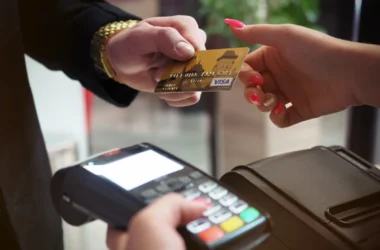



Imagine you’re at a bank in Katutura or a clinic in Rundu. Instead of carrying a booklet, three photocopies, and an affidavit, you just tap your ID card — and boom, your identity is verified in seconds.
That’s what Namibia’s new electronic identity card (E-ID) is promising.
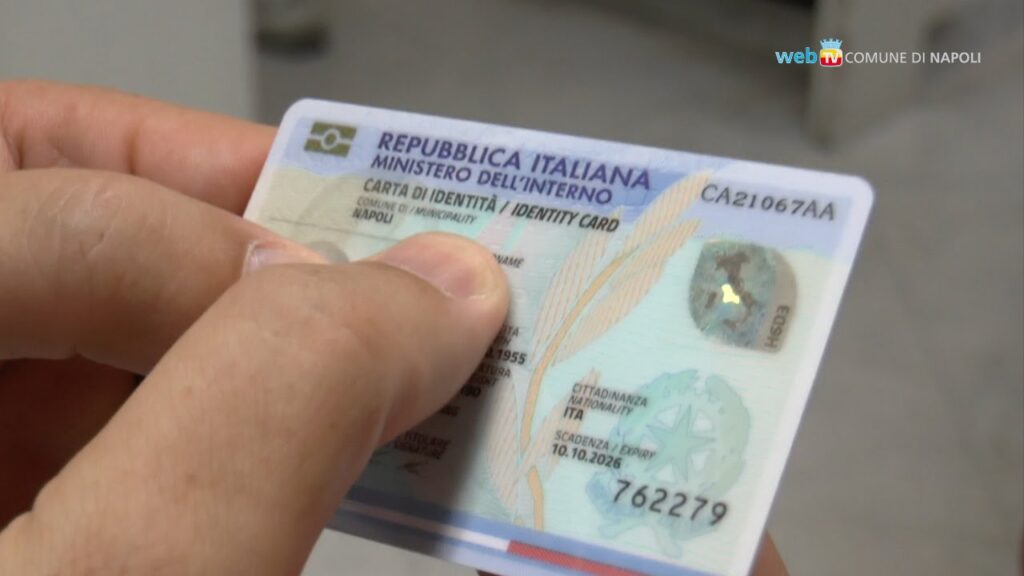
Launched by the Ministry of Home Affairs, Immigration, Safety, and Security (MHAISS), the E-ID is described as Namibia’s most advanced identity system ever. It’s smart, secure, and biometric — built with a contactless chip, just like a bank card.
But before we line up to register, we need to ask deeper questions:
What exactly is this E-ID? What does it offer — and what could it cost us?
What Makes This E-ID Different?
For decades, Namibia has relied on paper-based or laminated ID cards — useful, but outdated. The new E-ID brings four major changes:
- A built-in chip
Like your FNB or Bank Windhoek card, it can be tapped to pull up your details in seconds. - Biometric data
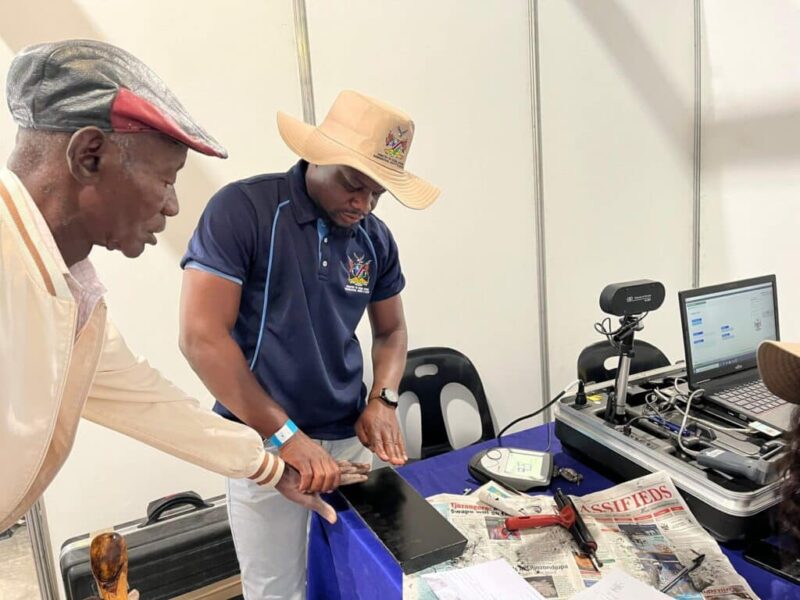
Your fingerprints are now stored on the card — making it much harder to forge or duplicate. - Cross-sector access
Hospitals, banks, schools, mobile networks — this card could become your passport to everything. - Fraud prevention
No more ghost grants, duplicate IDs, or “lost” records. In theory, at least.
How Will This Affect Everyday Life?
Take Aunty Maria in Okahandja. Right now, she might queue at the clinic with no papers, hoping someone remembers her name.
With the E-ID?
She taps the card on a handheld scanner. Her fingerprints match. Her records load instantly.
A student in Windhoek applying for NSFAS?
No more affidavits or certified copies. Their details are already verified — digitally.
Even in hard-to-reach places like Zambezi, Epukiro, or Opuwo, mobile units could use solar-powered biometric scanners to confirm your ID on the spot.
In short: it’s about speed, access, and modern public services.
But Wait — What Are the Risks?
This is where things get serious.
- Biometric data is permanent: If your fingerprint is stolen or your data leaked? You can’t “reset” it like a password.
- Weak laws, big risks: Namibia still has no comprehensive Data Protection Act. So who owns your data? Who decides who can see it?
- Not everyone is digitally included: What happens when a fingerprint doesn’t scan? Or someone’s name is misspelled? Will the elderly or remote villagers be locked out of health or pension services?
- Potential for surveillance: Today it’s for ID. Tomorrow it could track where you go, what you buy, or who you vote for. In places like Uganda, India, and Kenya, digital IDs have been used to monitor, punish, or exclude certain communities.
We must ask: are we building access, or building control?
So What Needs to Happen Next?
The Ministry plans a nationwide awareness campaign, starting Thursday, 26 June in Windhoek with July 2026 as the date for the full national rollout. A good step — but it must go beyond posters and ribbon-cutting.
Here’s what must happen:
- Community voices must be heard.
This isn’t just an IT issue. It affects pensioners, single mothers, informal traders — real people. - Clear public data policy.
Who stores the data? For how long? What if I want to opt out? - Real cybersecurity, not just PR.
Our national database must be guarded like a bank vault. Especially as we face more cyberattacks. - Rights-based legislation.
We urgently need a Data Protection Act — written with public input, not just consultants and donors.
Lessons from Elsewhere
- India’s Aadhaar system, the largest biometric ID project globally, faced massive data leaks and privacy concerns. Some citizens were denied rations or healthcare due to mismatched records.
- Kenya’s Huduma Namba was launched with excitement — but later suspended by court due to lack of proper data protection.
Namibia has a chance to get it right the first time — by learning from others.
The Bigger Picture: Why This Is More Than an ID
This E-ID isn’t just about registering births or verifying pensions. It’s the foundation for Namibia’s digital future — from e-health, mobile money, and e-voting, to cross-border identity systems in SADC.
If done right, it could help reduce corruption, speed up service delivery, and integrate our economy into the digital world.
If done wrong, it could be a surveillance nightmare.
Final Thought: A Smart Card Needs Smart Citizens
Namibia is not wrong to modernise. In fact, we’ve lagged behind for too long. This card could change lives.
But we must be smart.
A digital ID is not just a card — it’s a new social contract between government and citizen. And that contract must be built on trust, transparency, and public participation.
The card must empower people — not just control them.
We don’t just need a smart card. We need a smart system, smart laws, and smart citizens who understand their rights.
Reference Links & Further Reading
- “Understanding Biometric Surveillance” – Electronic Frontier Foundation
- Ministry of Home Affairs official statement (via Tulinane Sheehama reporting)
- Aadhaar Failures in India – The Wire, 2022
- Kenya’s Digital ID Challenges – Quartz Africa
- Namibian Government Digital Strategy – CRAN, 2023