


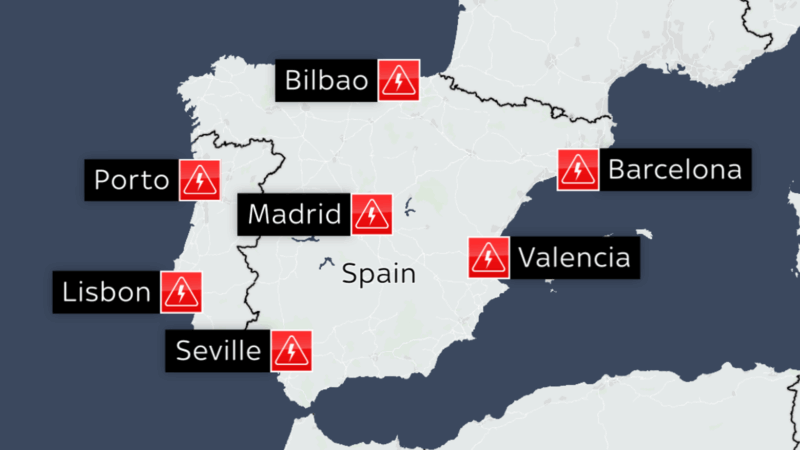
On a sunny Saturday in July 2024, large parts of Spain and Portugal suddenly went dark. From Lisbon’s busy waterfronts to Madrid’s buzzing metro lines — the lights went out, systems froze, and confusion reigned. While some dismissed it as a technical hiccup, others started whispering the one word no government ever wants to hear: cyberattack.
So… was this just a glitch in Europe’s power infrastructure — or a digital wake-up call for the rest of us, including Namibia?
Timeline of Events: What Happened and When
- Saturday, July 20, 2024 – Around 1 PM
Both Portugal and Spain experienced simultaneous power outages. Internet services, metro lines, traffic lights, and mobile towers were disrupted. Flights in and out of Lisbon and Madrid were delayed. - 1:10 PM
Portugal’s national energy operator REN issued a vague update, saying the problem appeared to be “grid-related.” - 1:30 PM
Spain’s Red Eléctrica (REE) followed suit, noting the issue stemmed from the southwestern European interconnection, but stopped short of giving full details. - By 4 PM
Power was gradually restored, though train delays and mobile network disruptions continued until the next morning. - Days Later
Reports emerged that the blackout may have been caused by an anomaly in the European Energy Transmission Network — possibly triggered by a malfunction or cyber vulnerability linked to smart grid automation.
How Did It Happen?
Officially, the Iberian blackout was blamed on a “technical fault” in the power interconnector between France and the Iberian Peninsula. But multiple energy experts flagged concerns that such a wide, simultaneous outage suggested either a cyber vulnerability or automated system failure.
The smart grid systems used in both Spain and Portugal are heavily digitised. They rely on real-time sensors, automated commands, and interconnected data platforms to control energy flow. If just one part of that network malfunctions — or is hijacked — the entire system can cascade into failure.
In simpler terms: Imagine your whole Windhoek suburb goes dark, not because of a transformer, but because a smart command somewhere in South Africa glitched or got hacked — and your house couldn’t “talk back” to the grid.
What Could Have Been Done Differently?
If this blackout was caused by a digital fault or cyberattack, there are several possible weak points that should’ve been addressed:
- Lack of segmented fallback systems
One command failure shouldn’t collapse a whole intercountry power grid. - Inadequate live monitoring
Smart grids need AI-based anomaly detection systems that can stop a glitch before it snowballs. - Insufficient cyber drill rehearsals
National utilities need regular simulations — “What happens if we get hacked tomorrow?” - Delayed crisis communication
Both REN and REE failed to issue timely updates, creating panic and speculation.
How Did They Restore Power?
Though authorities didn’t disclose full technical details, based on similar incidents, they likely followed this process:
- Isolation: Disconnected the affected segment of the energy grid
- Roll-back: Reverted automated settings to a stable baseline
- Manual restart: Engineers manually redistributed energy flows
- System checks: Verified if hardware was damaged or compromised
- Reconnection: Gradual re-synchronisation of local and cross-border grids
It’s the digital equivalent of pulling the plug, waiting a few minutes, and then restarting your PC — only with thousands of kilometres of cables and hundreds of software protocols involved.
What Namibia Should Learn From This
This wasn’t just a European problem. It’s a regional red flag for countries like Namibia that are racing to digitise without fully securing their infrastructure.
In Windhoek, we’re rolling out smart meters and digital billing.
In Walvis Bay, we’re dreaming of smart ports and automated logistics.
In Katima, we want cross-border energy trade.
But have we asked: What if our power system gets hacked? Do we have:
- A national cyber response protocol for utilities?
- A simulation plan to test grid vulnerabilities?
- A law that compels Nampower to notify users of cyber incidents?
At the moment, Namibia has no binding cybersecurity framework for utilities. If hackers or even an innocent software error hit us the way Spain and Portugal were hit, we wouldn’t just lose power — we’d lose trust.
Lessons for SADC Countries
- Don’t Digitise Without Safeguards
Every smart meter must be matched by a smart firewall. - Create Cross-Border Cyber Protocols
Regional energy projects like the Southern African Power Pool need shared incident response standards. - Test. Then Test Again.
National utilities must regularly simulate attacks and know how to respond. - Communicate Fast and Clearly
Silence fuels panic. Delays hurt credibility. - Invest in Local Skills
We can’t rely on European engineers when a cyberattack hits. Namibia needs its own grid cybersecurity experts — from Keetmans to Katima.
Conclusion: A Glitch or a Glimpse Into the Future?
What happened from Lisbon to Madrid may have been just a system fault. Or maybe it was the digital equivalent of a stress fracture — a warning that our reliance on “smart everything” is only as strong as our security behind it.
Namibia is building the foundations of its digital economy. But let’s not build on sand. If we want smart cities, smart ports, and smart power, we need smart policies to protect them.
Because when the lights go out… questions start piling up fast.
References & Further Reading
ENISA Report on Critical Infrastructure Cybersecurity
Reuters: Massive blackout hits Spain and Portugal
El País: Iberian blackout raises fears over cyber vulnerability in smart grid