



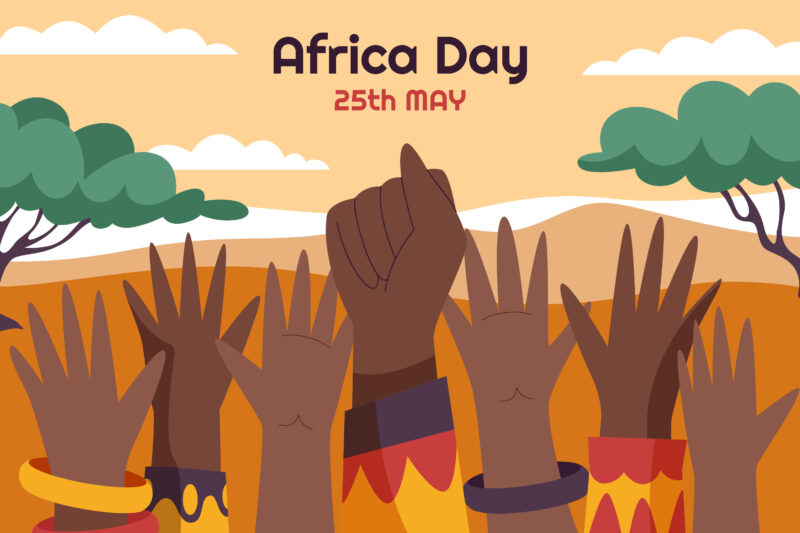
It’s May 25th. Africa Freedom Day. A day we dress the part, tweet the slogans, and quote the revolutionaries. But as we commemorate “liberation,” the uncomfortable question lingers louder than the speeches:
Are we truly free — or just flag-waving in systems we don’t control?
From foreign-hosted servers to imported e-voting systems, from outsourced cloud platforms to currencies printed in European factories, Africa’s sovereignty remains a work in progress — especially in the digital and economic spheres.
Africa Freedom Day: But Not for All
First, a reality check: not all African countries observe this day.
Countries like Zambia, Namibia, Zimbabwe, Angola, and Mozambique commemorate it. But for most of Africa, May 25th is just another day. No holiday. No flag-raising. No reflection.
That alone is telling — a continent supposedly united in history still fractured in practice. And if we can’t even agree on when to reflect on freedom, how do we agree on what freedom even means?
Digital Dependence: The New Colonial Hangover
We call ourselves free, but let’s look closer at the tech that powers our societies:
- Government websites hosted in foreign data centres
- Public sector emails run on Gmail or Outlook servers
- Cloud storage contracts with Europe or China
- E-health systems developed and maintained by foreign consultants
- Cybersecurity audits done by donor agencies, not national teams
In Namibia, the GRN Data Center is only now being fast-tracked — decades into independence. Until then, our sensitive government data floats across borders, handled by third parties.
We’re not just using foreign tools — we’re relying on foreign trust. That’s not freedom. That’s digital dependence in a suit and tie.
Money Matters — And We Don’t Print Ours
And it’s not just tech. Let’s talk about something more symbolic: money.
Recently, activist and author Joseph Kalimbwe sparked a wave of online reflection when he posted this on X:
“Over 40 out of 54 African countries do not print their money. Many including Zambia & Kenya, have for years printed money in Britain with Thomas De La Rue & Giesecke. Most French African countries print their money in France. Money is printed in Europe & sent to Africa!”
Read that again.
Money. Is printed in Europe. And sent to Africa.
In the 1960s, that would have sparked revolution. In 2025, we barely flinch.
Namibia? The Namibia Dollar is believed to be printed in Europe too — though exact details remain unclear to the public. And that’s the problem. We’re free, yet we don’t even control the physical symbol of our economy.
Who prints the Namibia Dollar?
And if we can’t print it ourselves, are we at least exploring secure digital equivalents we own?
Because we talk a lot about digital wallets, central bank digital currencies (CBDCs), and blockchain innovation — but we’re still importing banknotes on cargo flights.
SADC Snapshot: Still Climbing the Ladder
Zooming in on the region:
- Zambia is hosting global digital trade forums — yet still depends on Europe for both digital security and physical currency.
- Namibia has visionary policies — but poor execution and limited digital capacity.
- Zimbabwe can’t even keep its currency stable long enough to build a secure printing regime.
- Botswana, Mozambique, Lesotho — still dependent on development partners to build and secure their ICT infrastructure.
SADC is dreaming forward, yes — but it’s still balancing on borrowed ladders.
What Real Freedom Looks Like (And It’s Not a Celebration Speech)
Freedom means:
- Hosting our own data
- Building our own cyber defences
- Printing and protecting our own currency
- Governing our own platforms, not logging into Western ones
It’s not enough to talk “digital sovereignty” while emailing from Gmail and storing cabinet minutes in Ireland.
If Frankfurt crashes, how many African governments go offline?
If AWS pulls out, how many eGov systems collapse?
Final Word: Celebrate, But Stay Honest
Africa Freedom Day is necessary. Symbolic. Sacred even.
But it’s not enough to say “we are free.” Not when we still import passwords, print our money in London, and outsource our elections.
Until we host, code, mint, and protect our own digital and economic systems, freedom will remain a feeling — not a fact.
So yes, celebrate. But question too. Because the next phase of African liberation won’t come through speeches or sanctions. It’ll come through servers, software, and sovereignty.
And this time, we must write the code ourselves.